
A painful tooth can make even simple things difficult. You struggle to enjoy your favourite meals, hot tea becomes uncomfortable, and sleeping peacefully feels impossible. Then comes another concern. Your dentist recommends a root canal, but someone suggests visiting an endodontist instead.
Naturally, you’re unsure who to trust with your tooth. Both professionals can perform root canal treatment, but their training and areas of focus differ. The right choice depends on your tooth’s condition and how complicated the treatment might be.
Understanding these differences can help you feel more confident about your next dental appointment and the care you may need.
Why Does Your Tooth Require a Root Canal Treatment?
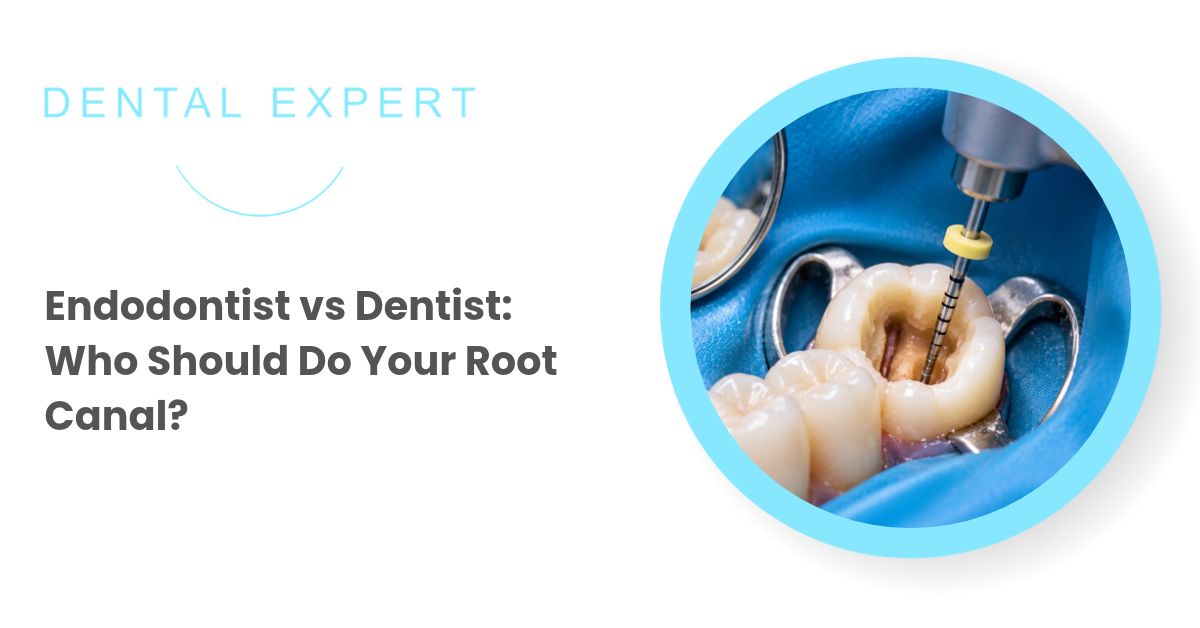
In case of a deep cavity, crack or injury in the tooth, its soft tissues (pulp) get damaged. This causes pain, swelling, or sensitivity to hot and cold food. The dentist removes the pulp, cleans and disinfects the canals and seals them to prevent reinfection. The tooth usually requires a restoration (e.g., a crown). To eliminate the pain during the treatment, local anaesthesia is used. However, a severely inflamed tooth sometimes needs more sophisticated anaesthetic care.
Can a General Dentist Perform a Root Canal Procedure?
A qualified general dentist can perform root canal procedures. This concerns teeth with normal canal structure. General dentists do also perform procedures such as fillings, crowns, cleaning, check-ups and etc. That is why they are usually the first dentists to look at your painful tooth.
The dentist takes X-rays of your tooth, examines the problem and offers proper treatment. But in case of unusual roots or some complications, they may advise you to visit a specialist.
What Is an Endodontist and How Does They Differ from a General Dentist?
An endodontist is a dentist who has got specialist training in the treatment of inner tooth problems.
Their specialisation is connected with the treatment of pulp, root canals and toothaches. Also, endodontists treat complications such as curved or narrow canals, dental injuries and repeated root canal procedures.
Moreover, endodontists use a dental microscope or 3D imaging to examine complicated cases. But not every root canal requires this equipment or specialised treatment.
When Do You Need to Visit an Endodontist?
Certain dental issues require an endodontist’s expertise. For example, a tooth with narrow, curved or blocked canals requires professional treatment. In addition, repeated symptoms after an initial root canal treatment also require further examination.
Look for the following symptoms: prolonged sensitivity, pain while biting, swollen gums, or a recurring gum boil. However, it does not necessarily mean that your tooth requires a root canal procedure. Proper examination and X-ray help you to find the cause of the issue.
How to Protect Your Tooth After the Treatment?
After the treatment, your dentist may prescribe a crown, especially if your back tooth is subject to strong chewing forces. It will help to avoid a fracture.
Also, follow all the recommendations about eating, toothbrushing and regular check-ups after the procedure. Proper dental care helps you to protect your treated tooth and gums.
Get Quality Dental Care With Dental Expert
The choice of a specialist depends on the nature of your dental problem, the state of your tooth and the complexity of the procedure. Both specialists can help you to preserve your natural tooth.
Schedule an Appointment with Dental Expert to discuss your symptoms and explore the condition of your tooth to find suitable root canal treatment options.

Dr. Denzil Albuquerque is an experienced dental clinician with over 12 years of experience, specialising in advanced root canal treatments, cosmetic dentistry, smile designing and pain management. At Dental Expert, he is committed to providing patient-focused care using advanced dental technology and personalised treatment approaches.